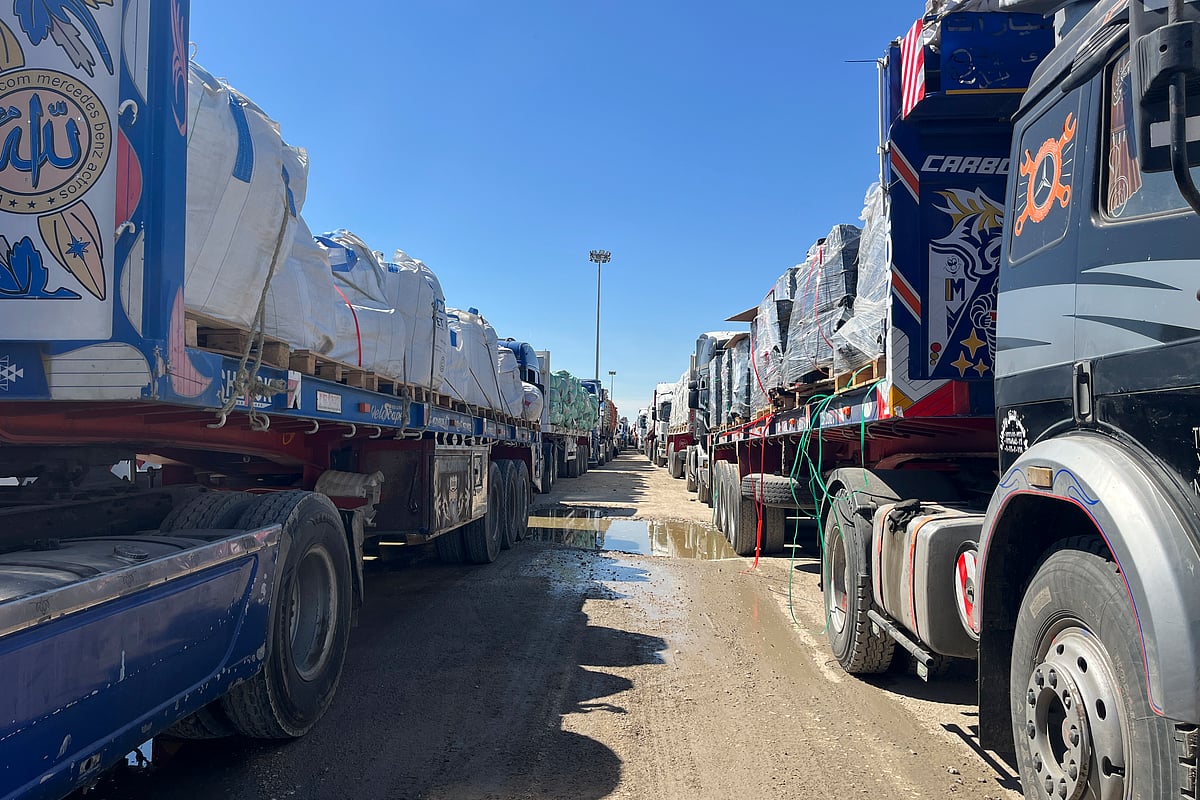
Israel’s cutoff of supplies to Gaza sends prices soaring as aid stockpiles dwindle
WFP said it may be forced to reduce ration sizes to serve as many people as possible. It said its fuel reserves, necessary to run bakeries and transport food, will last for a few weeks if not replenished soon.
There’s also no major stockpile of tents in Gaza, said Shaina Low, communications adviser for the Norwegian Refugee Council. The shelter materials that came in during the ceasefire’s first phase were “nowhere near enough to address all of the needs,” she said.
“If it was enough, we wouldn’t have had infants dying from exposure because of lack of shelter materials and warm clothes and proper medical equipment to treat them,” she said.
At least seven infants in Gaza died from hypothermia during Phase 1.
Urgently checking reserves
“We’re trying to figure out, what do we have? What would be the best use of our supply?" said Jonathan Crickx, chief of communication for UNICEF. "We never sat on supplies, so it’s not like there’s a huge amount left to distribute.”
He predicted a “catastrophic result” if the aid freeze continues.
During the ceasefire's first phase, humanitarian agencies rushed in supplies, with about 600 trucks entering per day on average. Aid workers set up more food kitchens, health centers and water distribution points. With more fuel coming in, they could double the amount of water drawn from wells, according to the U.N. humanitarian agency.
Around 100,000 tents also arrived as hundreds of thousands of Palestinians tried to return to their homes, only to find them destroyed or too damaged to live in.
But the progress relied on the flow of aid continuing.
Oxfam has 26 trucks with thousands of food packages and hygiene kits and 12 trucks of water tanks waiting outside Gaza, said Bushra Khalidi, Oxfam’s policy lead in the West Bank.
“This is not just about hundreds of trucks of food, it’s about the total collapse of systems that sustain life,” she said.
The International Organization for Migration has 22,500 tents in its warehouses in Jordan after trucks brought back their undelivered cargo once entry was barred, said Karl Baker, the agency's regional crisis coordinator.
The International Rescue Committee has 6.7 tons of medicines and medical supplies waiting to enter Gaza and its delivery is “highly uncertain,” said Bob Kitchen, vice president of its emergencies and humanitarian action department.

Advertising by Adpathway







;)