‘Artificial Intelligence May Not Replace Doctors, But Doctors Who Use AI May Replace Those Who Don't’: Ashoka University Dean
Last Updated:
Dr Anurag Agrawal believes AI has the potential to revolutionise healthcare, particularly in training and education, by using tools like virtual reality to build a larger, more skilled workforce

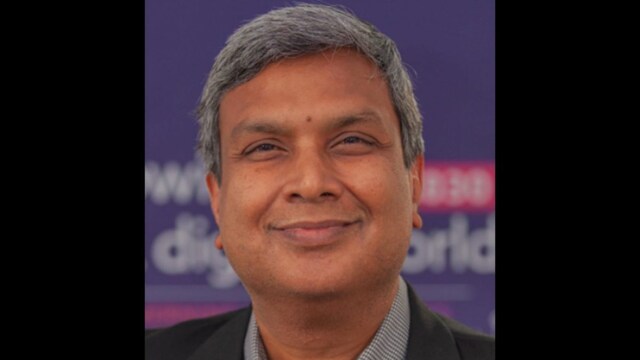
Ashoka University's Dr Anurag Agrawal. (X)
Most doctors and healthcare professionals are still unfamiliar with the concepts and applications of Artificial Intelligence (AI) despite the growing buzz around it in healthcare, Dr Anurag Agrawal, dean of the Trivedi School of Biosciences at Ashoka University, told News18, flagging the importance of early exposure to AI for Indian doctors. He pointed out that AI will not replace doctors, but doctors who use AI may replace those who don’t.
“Unfortunately, most healthcare professionals are not well versed with AI. This is seen in some studies where doctors using AI did not benefit much and, in some cases, even performed worse. Like everyone else, they too will require training in the use of such tools," Agrawal, who is also the head of the Koita Center for Digital Health at Ashoka University, told News18.
related stories
On being asked what skills future healthcare professionals should prioritise to stay relevant in an AI-driven landscape, he replied: “There is no specific skill that is required, just early exposure to AI and the opportunity to gain skills in using it well. AI will not replace doctors but doctors who use AI may replace those who don’t."
He believes that AI has the potential to revolutionise healthcare, particularly in training and education, by using tools like virtual reality to build a larger, more skilled workforce.
“AI has the potential to revolutionise healthcare. I think that the biggest impact will not be in the patient or doctor-facing but in training and education, where the use of AI and areas like virtual reality will be used to create a larger and more skilled workforce."
He said, currently we are suffering from a “competency deficit" as well as a lack of suitable trainers. “AI can fill this gap."
This is perhaps the most important point. The future of medicine is interdisciplinary and the education system must change. Since it is difficult for medical colleges to bring the change by themselves, they will need support from universities and technological institutions.
Agrawal — was also a former director of the Institute of Genomics and Integrative Biology, a national laboratory of CSIR, India — explained how AI is currently being used to accelerate genomic research. Genomics is a very natural field for AI applications. “Foundation models trained on huge amounts of genomic data have provided new insight about the tree of life. We expect such models to greatly improve the calling of variants and deleterious mutations."
Agrawal Weighs In On Delhi-NCR’s AQI
Talking about how human bodies are becoming habitual of living in poor to severe air quality levels, Agrawal, who is also a pulmonologist, said it is scientifically shown that exposure to AQI levels seen in Delhi-NCR adversely affects the development of children and reduces their growth. “This is not limited to the lungs and also affects other organs. Adults, of course, suffer in myriad ways with increased risk of new disease or faster progression of existing diseases."
“We are already seeing an increase in respiratory diseases ranging from asthma exacerbations to pneumonia. Non-smokers are also at risk of chronic obstructive pulmonary disease (COPD), which is otherwise much more commonly seen in smokers."
Pollution has been seen to increase blood pressure and increase the risk of cardiovascular events like stroke or heart attacks. Hospital admissions due to worsening health become more frequent for the elderly when air pollution rises.
Digital Health Devices Worth The Hype?
As people become more health conscious and aware of their well-being, how much can the average person trust digital health solutions like health apps, wearable devices, and telemedicine consultations? Agrawal believes that though there is a value to these solutions, the hype is excess. “I think the common man should trust solutions that are certified by medical societies, academic institutions, or government as a starting point while becoming more digitally literate so that they can form more informed decisions."
Berlin-based international health conference, The World Health Summit, will be held in India for the first time. The summit, which recognises the interdisciplinary nature of health as well as the forthcoming change due to technology, is being hosted by Ashoka University along with a few other universities. “It is a wonderful opportunity to learn from others while also sharing the Indian experience of scaling access at a billion-plus scale. It continues the wonderful theme of the G20 presidency."

Advertising by Adpathway







;)