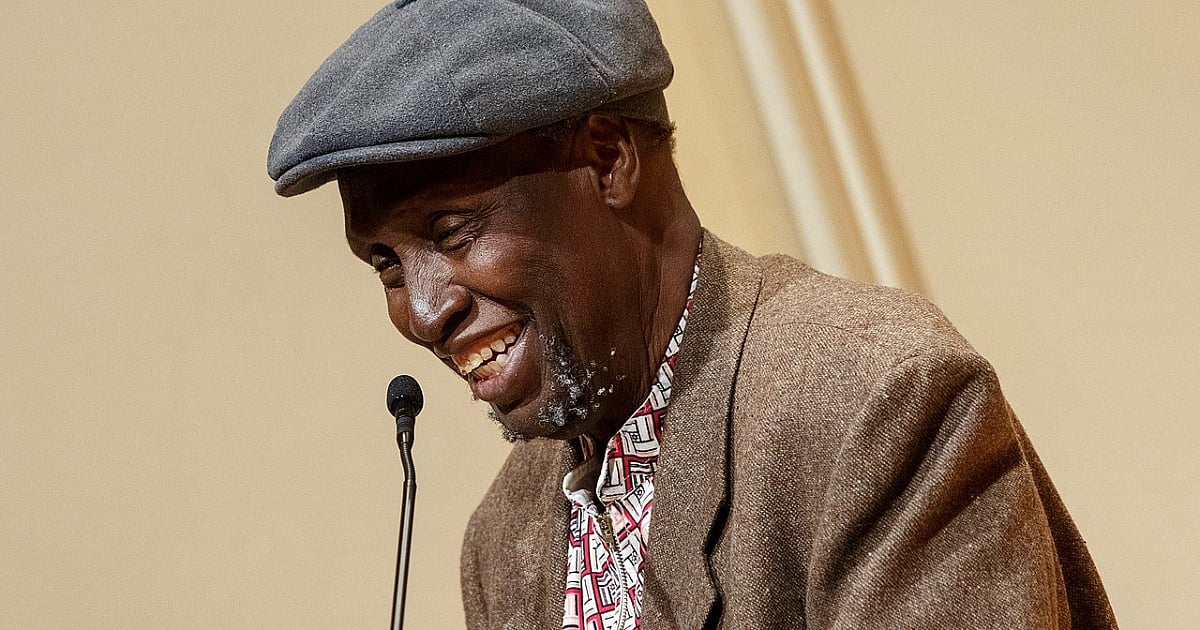
Ngugi wa Thiong'o: His prose was militant, held no brief for elites
Ngugi in person
It was the summer of 2018. Ngugi wa Thiong’o had been in exile from Kenya for over 30 years. He was in Delhi for a talk on translation which I was covering.
His first greeting was a hug. In his Hawaiian shirt, he gamely posed for photographs and then settled down for a long interview at the time that tested his publisher Naveen Kishore's patience; Kishore had been waiting to whisk him away for a dinner at historian Romila Thapar's home.
But after sussing out his India connections—Ngugi had written an introduction for poet and Maoist ideologue Varavara Rao's book Captive Imagination: Letters from Prison and his memoir, Dreams in a Time of War, had just then been translated into Telugu—we were onto how in high school, he saw a library for the first time, his late appreciation of the Mahabharata, and was warming up to his 'position' as a language warrior when the inevitable knock on the door cut the interview short. Over e-mails we finished the rest.
The spotlight on translations today also recalls Ngugi's batting for his and everybody’s mother tongue and the need for literature in that language.
Wrote the first East African English novel
His novel, Weep Not, Child in English, published in 1964, was the first East African English novel but he decided to write in Gikuyu after he was jailed in 1977.
His position was simply this. He was neither anti-Shakespeare or anti-Dickens, nor did he see them as 'White literature', but he did not want it to be central to the universe of imagination all around the world.
Ngugi was a prose stylist in English. But the gist of what he told me that day, when asked if he was never going to write in English again, can be best summed up in the words of Bartleby, that most diffident and subversive character of Herman Melville. He would simply 'prefer not to'.

Advertising by Adpathway






;)