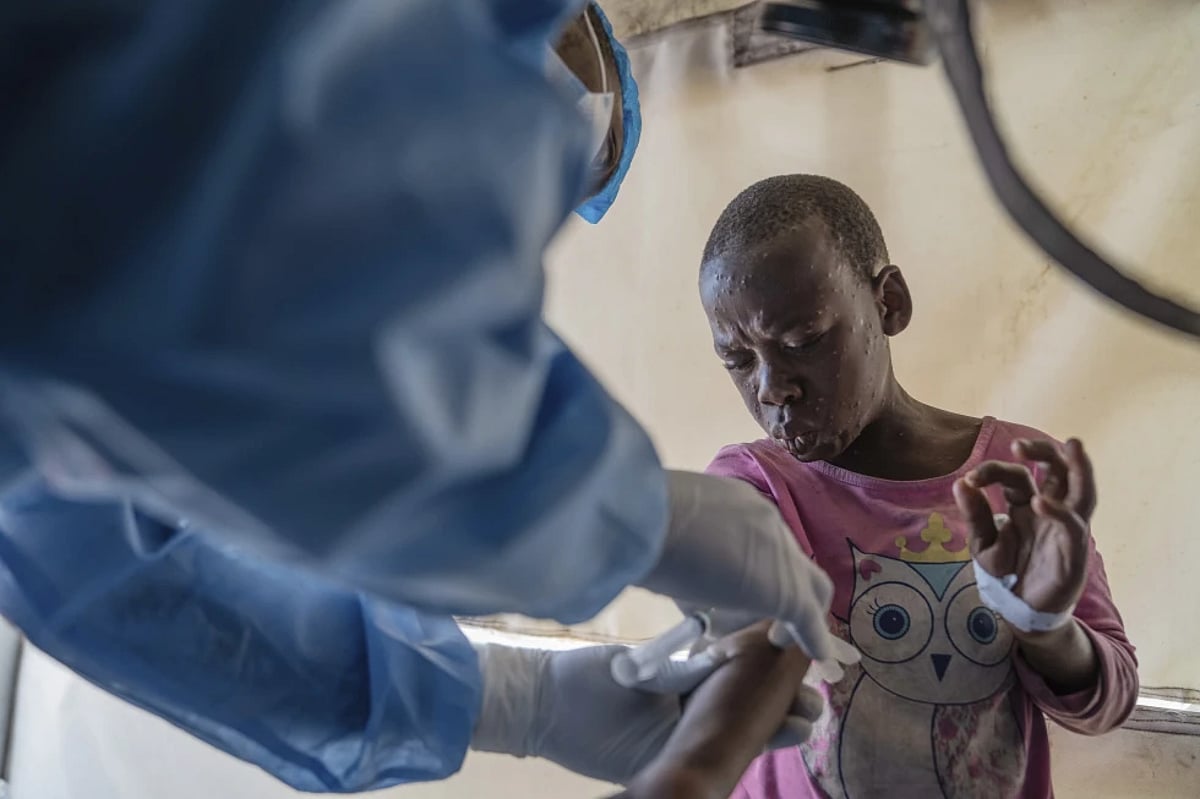
WHO decides mpox epidemic still global health emergency
15 countries so far
Mpox is caused by a virus from the same family as smallpox. It can be transmitted to humans by infected animals but can also be passed between people through close physical contact.
The disease, which was first detected in humans in 1970 in the DR Congo, then known as Zaire, causes fever, muscular aches and large boil-like skin lesions, and can be deadly.
It has two subtypes: clade 1 and clade 2.
The virus, long endemic in central Africa, gained international prominence in May 2022 when clade 2 spread around the world, mostly affecting gay and bisexual men.
Nearly 128,000 mpox cases have been laboratory confirmed across 130 countries since then, including 281 deaths, WHO data shows.
The WHO declared a global health emergency in July 2022, but thanks to vaccination and awareness drives that helped stem the spread, that declaration was lifted in May 2023.
Just a year later, however, a new two-pronged epidemic broke out mainly in the DR Congo, with both the original clade 1a strain and a new strain, clade 1b.
This prompted the WHO's new emergency declaration last August.
To date, community spread of the clade 1b strain has been confirmed in the DRC and five other African nations, and it has been detected in another 15 countries around the world in connection with travel, WHO data shows.
The DRC confirmed more than 13,000 mpox cases and 43 deaths in 2024, and the country confirmed more than 2,000 cases in the first five weeks of this year -- more than half of the cases confirmed globally.

Advertising by Adpathway







;)