Venezuelan migrants deported by US ended up in Salvadoran prison—this is their legal status
What are lawyers doing?
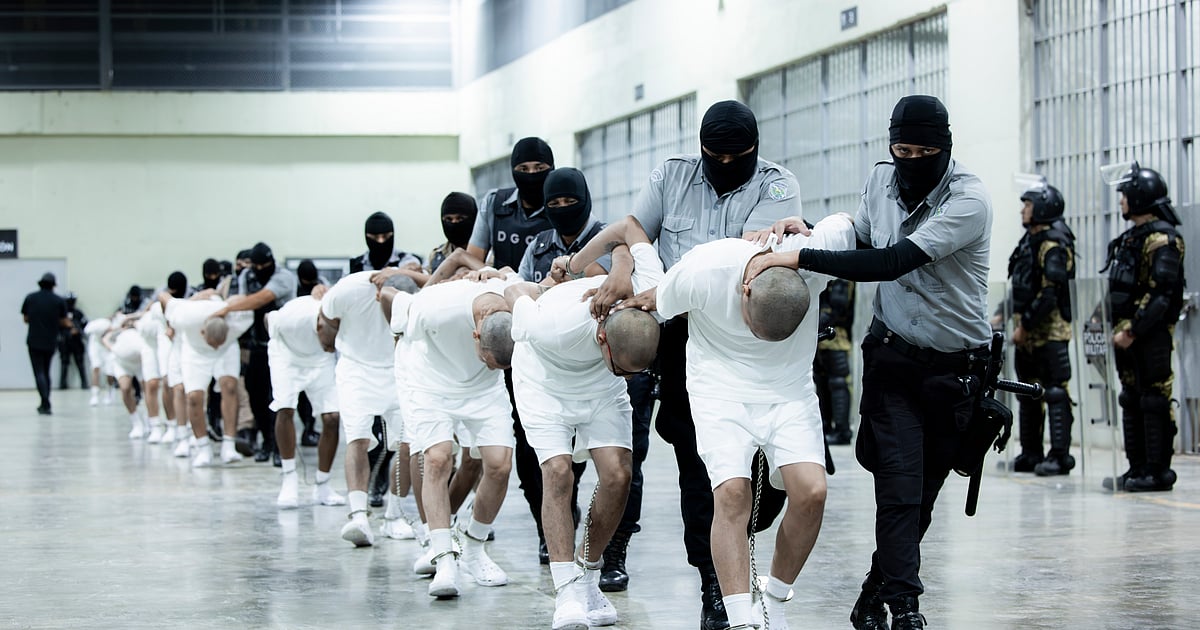
Lawyers hired by the Venezuelan government filed a legal action Monday in El Salvador aimed at freeing the 238 Venezuelans deported by the United States.
Jaime Ortega, who says he represents 30 of the imprisoned Venezuelans, said his firm filed the habeas corpus petition with the Supreme Court's Constitutional Chamber. He said that by extension they requested that it be applied to all Venezuelans detained in El Salvador.
Before it was filed, constitutional lawyer Enrique Anaya had suggested human rights organizations and the prisoners' families should file habeas corpus petitions, essentially compelling the government to prove someone's detention was justified "as a mechanism to denounce (the situation) as well as to pressure" the government.
Still, Anaya said the lack of judicial independence in El Salvador made success unlikely. Bukele's party removed the justices of the Supreme Court's Constitutional chamber in 2021 and replaced them with judges seen as more amenable to the administration.
"Who is going to decide these people's freedom, US judges, Salvadoran judges?" Anaya asked. The habeas corpus petitions could at least "show the illegitimacy of this vacuum."
How hard is it for Salvadorans to get out of prisons there?
El Salvador has lived under a state of emergency since March 2022, when Congress granted Bukele extraordinary powers to fight the country's powerful street gangs.
Since then, some 84,000 people have been arrested, accused of gang ties. The state of emergency has allowed authorities to act without basic protections like access to a lawyer or telling detainees why they're being arrested. They can be held for 15 days without seeing a judge.
Homicides have plummeted in El Salvador and the improved security has fueled Bukele's popularity.
But while Bukele has said some 8,000 of those arrested have been freed for lack of evidence, many more have found no way out.
Last year, the Due Process Foundation published a report showing that the Constitutional Chamber of the Supreme Court had "systematically" rejected more than 6,000 habeas corpus petitions made by families of people arrested under the state of emergency.

Advertising by Adpathway







;)