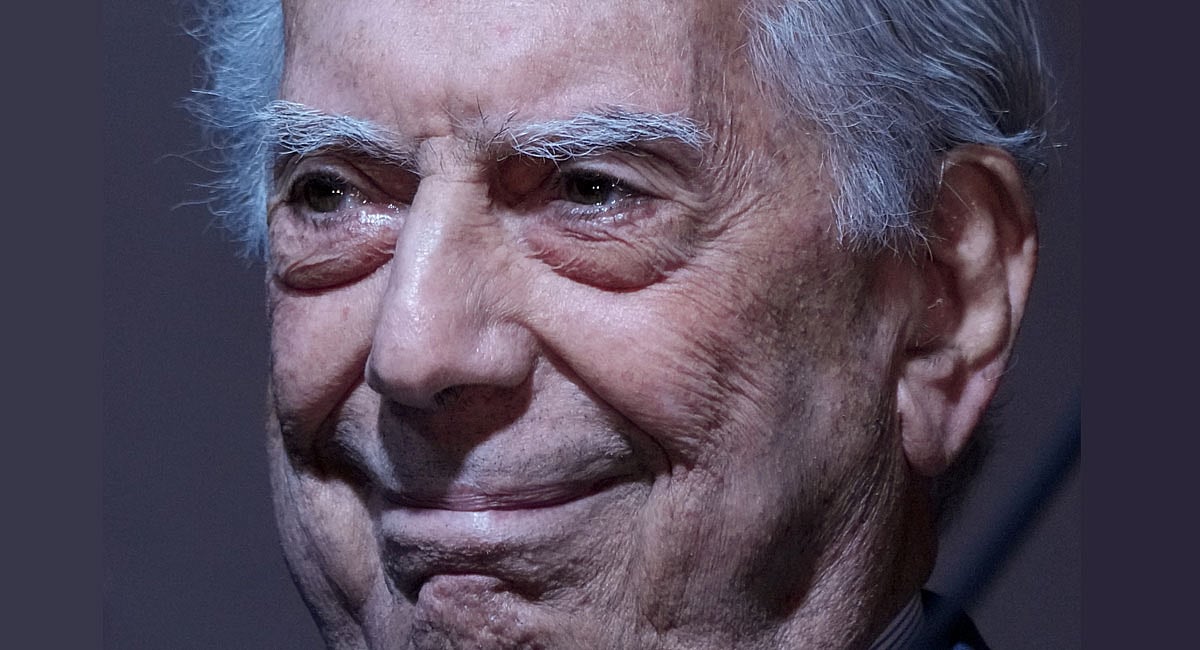
Mario Vargas Llosa, Peruvian author and Nobel literature laureate, dies at 89
Jorge Mario Pedro Vargas Llosa was born March 28, 1936, in Peru’s southern city of Arequipa, high in the Andes at the foot of the Misti volcano.
His father, Ernesto Vargas Maldonado, left the family before he was born. To avoid public scandal, his mother, Dora Llosa Ureta, took her child to Bolivia, where her father was the Peruvian consul in Cochabamba.
Vargas Llosa said his early life was “somewhat traumatic,” pampered by his mother and grandmother in a large house with servants, his every whim granted.
It was not until he was 10, after the family had moved to Peru’s coastal city of Piura, that he learned his father was alive. His parents reconciled and the family moved to Peru’s capital, Lima.
Vargas Llosa described his father as a disciplinarian who viewed his son’s love of Jules Verne and writing poetry as surefire routes to starvation, and feared for his “manhood,” believing that “poets are always homosexuals.”
After failing to get the boy enrolled in a naval academy because he was underage, Vargas Llosa’s father sent him to Leoncio Prado Military Academy — an experience that was to stay with Vargas Llosa and led to “The Time of the Hero.” The book won the Spanish Critics Award.
The military academy “was like discovering hell,” Vargas Llosa said later.
He entered Peru’s San Marcos University to study literature and law, “the former as a calling and the latter to please my family, which believed, not without certain cause, that writers usually die of hunger.”
After earning his literature degree in 1958 — he didn’t bother submitting his final law thesis — Vargas Llosa won a scholarship to pursue a doctorate in Madrid.
Vargas Llosa drew much of his inspiration from his Peruvian homeland, but preferred to live abroad, residing for spells each year in Madrid, New York and Paris.
His early novels revealed a Peruvian world of military arrogance and brutality, of aristocratic decadence, and of Stone Age Amazon Indians existing simultaneously with 20th-century urban blight.
“Peru is a kind of incurable illness and my relationship to it is intense, harsh and full of the violence of passion,” Vargas Llosa wrote in 1983.
After 16 years in Europe, he returned in 1974 to a Peru then ruled by a left-wing military dictatorship. “I realized I was losing touch with the reality of my country, and above all its language, which for a writer can be deadly,” he said.
In 1990, he ran for the presidency of Peru, a reluctant candidate in a nation torn apart by a messianic Maoist guerrilla insurgency and a basket-case, hyperinflation economy.

Advertising by Adpathway





;)