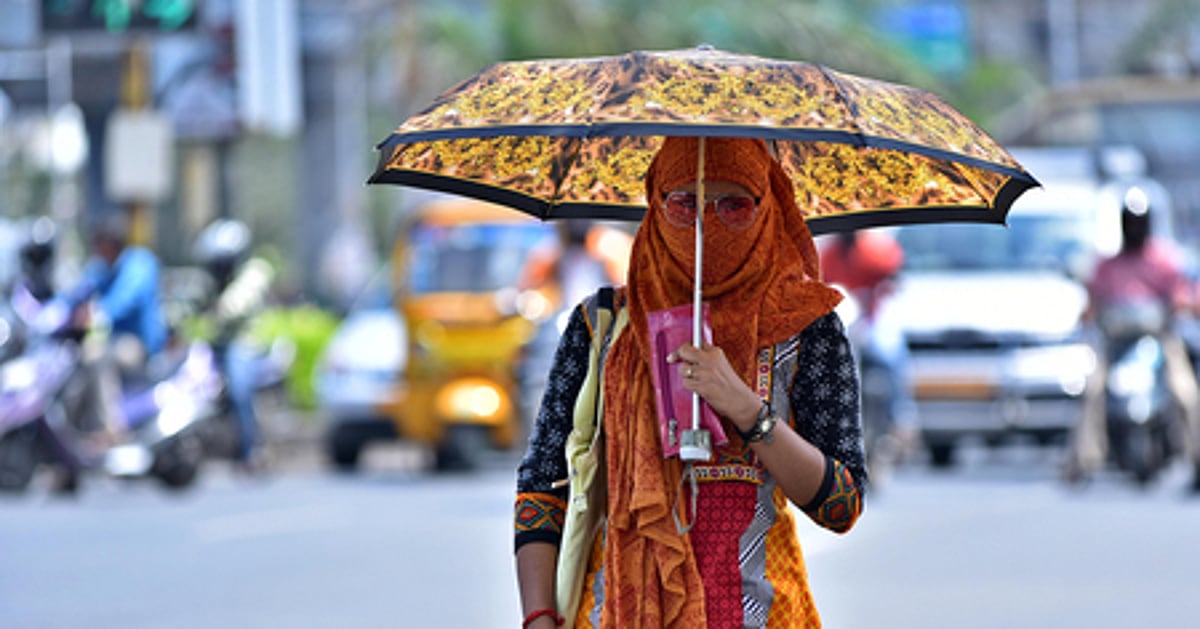
Nearly all of Tamil Nadu facing high or very high heat risk
Although TN is a coastal state with naturally high humidity, recent data shows that relative humidity has increased even during peak summer months, particularly in interior districts. This reduces the effectiveness of sweating as a cooling mechanism, worsening heat stress, said Madhavan Nair Rajeevan, vice-chancellor of Atria University and former secretary at the Ministry of Earth Sciences.
“Urbanisation has also been factored into the index. The report incorporates satellite-derived land-use and land-cover data, which shows a sharp expansion of built-up areas in cities like Chennai, Coimbatore, Tiruchy and Madurai. In Chennai, this has led to a measurable rise in nighttime minimum temperatures and a shrinking diurnal temperature range,” CEEW researchers said.
The state has formally recognised heatwaves as a disaster eligible for mitigation funding, yet most of its Heat Action Plans lack data-backed vulnerability assessments.
Sudha Ramen, member of the State Planning Commission, acknowledged that there are gaps in availability of data in general to effectively tackle the issue, but Tamil Nadu is taking measures to mitigate the heat stress on its population. “Department of Public Health has given an advisory to all the private hospitals to have an exclusive data reporting mechanism, especially for people who come with ailments that would have been caused due to heat stress,” she said.

Advertising by Adpathway







;)