Internet and phone outage in much of Gaza disrupts humanitarian operations and deepens isolation
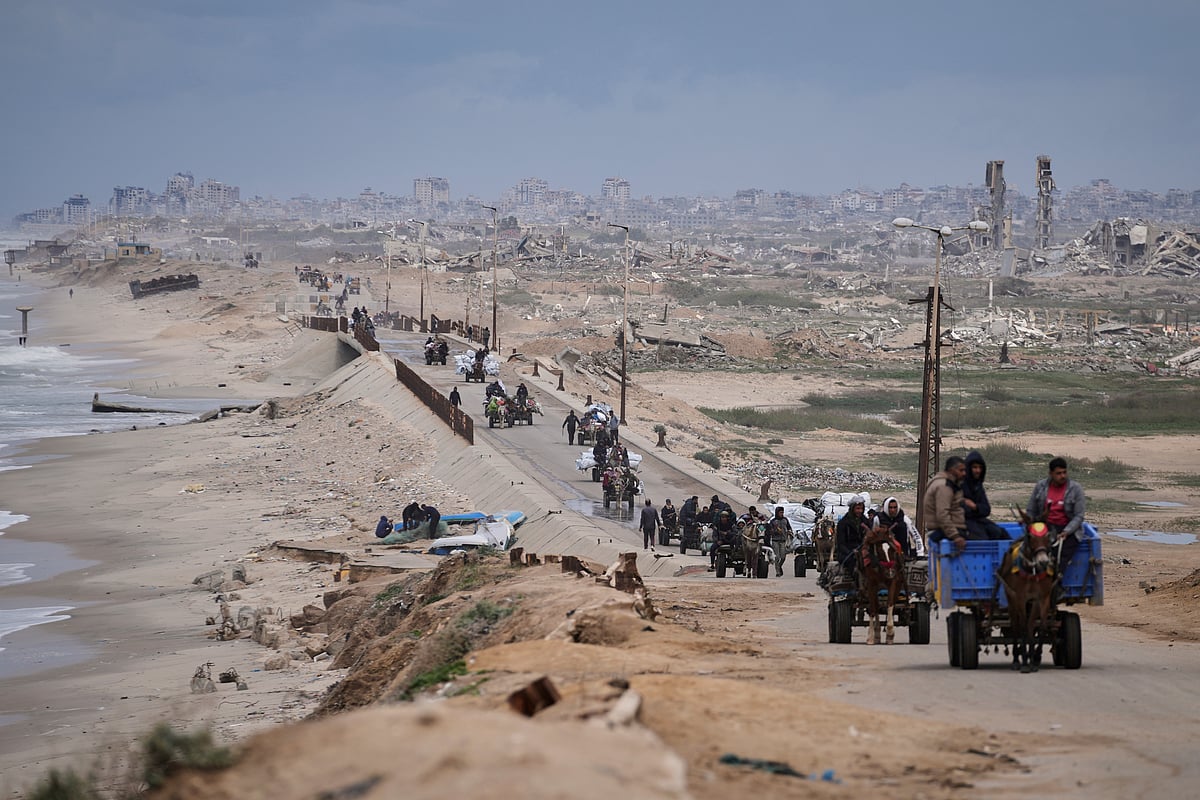
Palestinians in Gaza rely heavily on cell service, as unsafe roads and fuel shortages limit movement across the enclave. Humanitarians say those in affected areas will struggle to access information on aid and medical services or call for ambulances.
“Telecoms have been used as a weapon of war against civilians,” said Juliette Touma, communications director at UNRWA, the U.N. agency for Palestinian refugee that is the main service provider in Gaza.
The IDF didn't immediately respond to request for comment.
The vast majority of UNRWA workers don’t have connectivity in the areas affected by the outages. As a result, they and other aid workers have struggled to deliver aid and coordinate with one another, Touma told the AP.
“Sometimes we get a signal when a team member has the courage to go on the rooftop of a building, which is extremely dangerous under strikes, and they send us a message that they’re alive. I can’t tell you how much of a relief it is, but they’re more sporadic and less regular,” said Touma. Some people rely on E-sims, but they are not compatible with all devices and can only work in certain areas.
Unreliable mobile service
Over 70% of telecommunications networks in Gaza has been partially or completely destroyed as of August 2024 since the war began, according to statistics released by the Palestinian Ministry of Telecommunication and Digital Economy, cited by the Palestine Economic Policy Research Institute. However, Paltel said technical teams offered some technical solutions that would restore services.
When they hear nearby strikes, Palestinians without connection don’t know whether evacuation orders are issued and where should they relocate to, said Shaina Low, the Norwegian Refugee Council's communications adviser.
“This also means that people are isolated. They can’t communicate with their family and friends inside of Gaza and understand what the current situation is or get external support from networks outside,” she said.
Limited or unreliable mobile service has made it difficult for ambulances and civil defense teams to reach people in need of life-saving assistance, Low added.
Fikr Shalltoot, Gaza director for the group Medical Aid for Palestinians, said its doctors working in hospitals and clinics in effected areas can't document or share their work with managers.

Advertising by Adpathway







;)