Europe at crossroads: Unite or be left behind?
And there we have it – the much-anticipated NATO 2025 Summit has drawn to a close. After prolonged disagreements between EU leaders and the current US administration, a deal has finally been struck: NATO member states will commit 5% of their GDP to defence spending – with 3.5% allocated to core defence, and an additional 1.5% directed towards critical infrastructure and modern defence measures, including cybersecurity, writes Dr Helena Ivanov, Associate Fellow, The Henry Jackson Society,
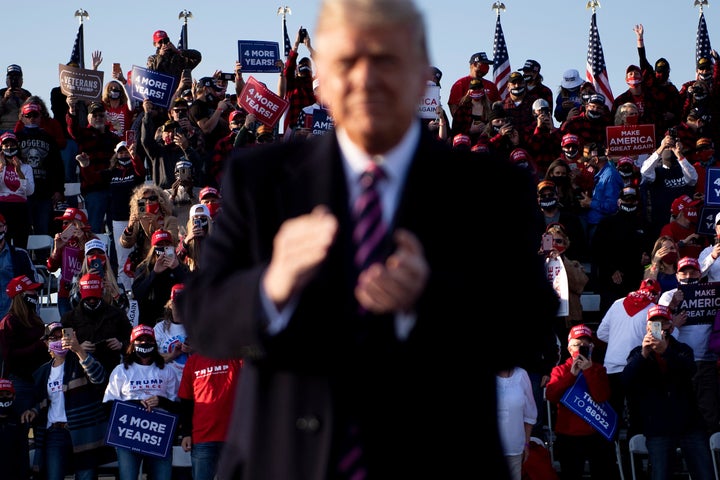
President Trump emerged visibly pleased, declaring that the United States remains committed to Article 5 – the foundational NATO principle that an attack on one member is an attack on all. This statement addressed the growing anxiety in many European capitals about waning American security guarantees. However, the commitment came with a caveat: it appears to be conditional on other NATO members meeting the 5% spending target.
On the surface, the Summit may appear to have delivered the two core outcomes many had hoped for – a renewed commitment to collective defence, and a serious pledge to increased military investment. But scratch beneath the surface, and it becomes evident that tensions remain – and could very well intensify.
Many NATO members remain deeply uneasy about President Trump’s transactional approach to foreign policy – an approach that has been on display in his ambivalence towards the war in Ukraine and the conflict in the Middle East. His unpredictability, and perceived affinity for authoritarian strongmen, continues to erode trust. Even with a formal spending pledge in place, the political consensus behind it is shaky. Spain outright refused to endorse the 5% target, Slovakia remains hesitant, and several major economies – particularly France, Belgium and Italy – are unlikely to meet it without major political and economic disruption. What consequences this might trigger from Washington remains to be seen.
Moreover, the Summit did not address the most contentious issue facing the alliance: the war in Ukraine. While President Trump did meet President Zelensky on the margins, there was little in the way of strategic alignment between the US and Europe. There remains no clear consensus on how to deal with Russia or how long-term support for Ukraine should be structured. Many European leaders remain wary of Trump’s unusually warm posture towards President Putin – raising further doubts about the alliance’s future coherence.
This lack of clarity and unity is compounded by the deeper mistrust that now characterises transatlantic relations. While adversaries such as Russia and China stand ready to exploit any sign of division, Europe also faces internal threats. Within the EU, countries like Hungary continue to openly challenge common policies, weakening the Union’s ability to present a unified front. Internally, polarisation is growing across societies, threatening democratic cohesion and stability from within.
So while the NATO Summit did produce headlines of progress, it would be a mistake to view it as a turning point. At best, it was a temporary patch over a widening fault line.
As the forthcoming Henry Jackson Society report argues, Europe must seize this moment to chart a new course. Greater unity is essential – and an increase in defence spending is a necessary part of that equation. But more than money is required. Europe must also become more self-reliant, less dependent on the goodwill of the White House – especially when that goodwill appears conditional and unstable.
To that end, our report sets out a roadmap for European resilience. We argue that every EU country should target a minimum of 3% of GDP for defence. This would not only strengthen European security architecture, but stimulate domestic industries and enhance geopolitical credibility. Structural reforms must accompany this spending – including the creation of an EU Defence Envoy to coordinate strategy at the highest level, and the establishment of a European Defence Board to streamline procurement and decision-making.
The NATO Summit may have delivered short-term reassurance, but it has not resolved the underlying issue: the fragility of the relationship between Washington and Brussels. For now, stability depends on whether NATO members keep the President satisfied – hardly a reassuring foundation for long-term security planning. Europe can no longer afford to wait passively for the next crisis. It must act – to build its own capacity, assert its own strategic direction, and become a security actor in its own right.
https://www.npr.org/2025/06/26/nx-s1-5445845/trump-nato-summit
https://www.npr.org/2025/06/26/nx-s1-5445845/trump-nato-summit
Share this article:

Advertising by Adpathway







;)