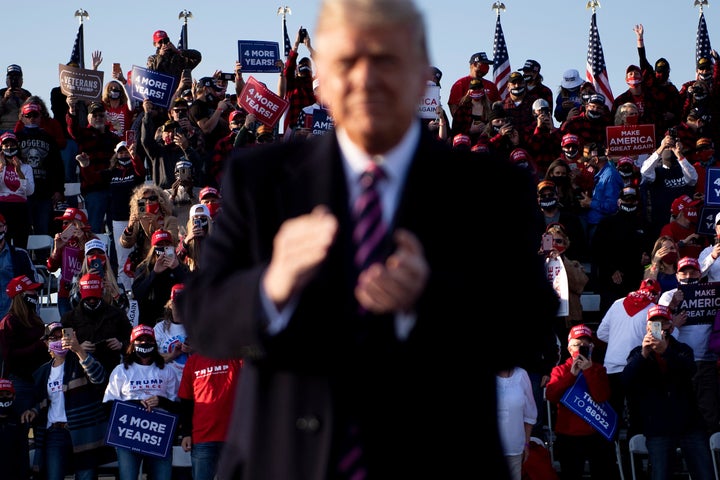
Firm chair Brad Karp said he struck a deal with the White House to save his business. But in the weeks since, the firm has lost some high-profile talent.
Three months ago, Paul, Weiss, Rifkind, Wharton & Garrison was under attack.
The global law firm had just become the target of an executive order signed by President Donald Trump directing the firm and its clients to be cut off from government contracts, and for firm lawyers to lose their security clearances and be restricted from entering government buildings or dealing with federal employees.
Paul, Weiss wasn’t the first firm to be the focus of such an executive order, but it would go on to be the first to negotiate a deal with the White House in order to get it lifted. At the time, the firm’s leader Brad Karp said he was trying to save his team from an “existential crisis.”
Since then, the firm has endured. But the decision to strike a deal has led to high-profile departures among partners and drawn condemnation from Democrats and others in the legal community.
After Karp made a deal with Trump, at least 10 partners in the litigation department have resigned from the firm, including several with close ties to Democrats. A group of the departing partners have joined together to start their own firm where they will continue to represent tech giants like Meta and Google, and another has jumped ship to one of the four firms that chose to fight the administration in court. While the firms that have fought Trump have been vindicated in multiple swift rulings, Paul, Weiss has been dealing with fallout in the aftermath of the deal, according to three former attorneys and five others with knowledge of the firm granted anonymity to speak candidly about internal dynamics.
“They made a calculated decision,” said Elizabeth Grossman, executive director of government watchdog group Common Cause Illinois and a former Paul, Weiss associate who helped organize alumni opposition to the deal. “They were thinking about their bottom line… I think what we’ve seen is that they made the wrong decision.”
Founded 150 years ago in New York, Paul, Weiss is now one of the largest and most profitable firms in the world, with more than 1,000 lawyers in offices across North America, Europe and Asia and an annual revenue of $2.6 billion. The firm touts its pro-bono work and its lawyers were frequently involved in cases challenging controversial policies during the first Trump administration.
The firm’s commitment to “not adopt, use or pursue any DEI policies” and provide the equivalent of $40 million in free legal work to “support the administration’s initiatives” would become the framework used by eight other law firms to strike similar deals committing a total of nearly $1 billion in pro bono work to causes favored by the president. Being the first firm to fold meant Paul, Weiss secured a better deal than those who came later, but it also turned the firm into a lightning rod for anger at Big Law’s failure to stand up to Trump.
Karp and a spokesperson for Paul, Weiss declined to comment.
The first major personnel blow for Paul, Weiss came at the end of May, when co-chair of the litigation department, Karen Dunn, announced that she and three of her colleagues would be leaving to start a new litigation boutique firm. Dunn has had close ties to Democrats for years and previously worked as an associate White House counsel under former President Barack Obama. She also helped former Vice President Kamala Harris prepare for her 2024 general election debate with Trump.
Leaving with Dunn was Jeannie Rhee, who previously represented former Secretary of State Hillary Clinton in a lawsuit dealing with her use of a private email server and worked under special counsel Robert Mueller during his investigation into allegations of Russian interference in the 2016 election.
During the week between Trump’s order targeting Paul, Weiss and the announcement of the deal, the firm’s management committee, including Dunn and Rhee, prepared to challenge the order in court, according to three of the people with knowledge of the firm. The group, led by chair of the firm’s Supreme Court practice, Kannon Shanmugam, worked on a motion asking a judge to immediately halt enforcement of the order while litigation played out, but the effort was tabled in favor of making a deal, one of the people said.
A second one said that in her capacity as a member of the management committee, Dunn was involved in the conversations about making a deal with the White House. That person said Karp consulted the firm’s partnership in deciding whether to make a deal, and the “vast majority” of the more than 200 partners were in favor of it at the time.
Dunn began telling lawyers inside and outside the firm of her plans to leave in the days and weeks following the deal, according to one of the people.
Dunn and Rhee declined to comment. Shanmugam did not respond to a request for comment.
In recent weeks, five additional partners and at least eight associates, the majority of whom worked with Dunn at her previous firm and moved to Paul, Weiss around the same time as she did, have left Paul, Weiss to join Dunn and her colleagues at the fledgling firm Dunn Isaacson Rhee. Dunn and her partners have filed notices in multiple ongoing cases indicating they will continue representing big tech clients they were already representing at Paul, Weiss.
“Paul, Weiss used to be the gold standard for litigation,” said Bryson Malcolm, founder of legal recruiting firm Mosaic Search Partners. “I think that reputation is waning.”
Earlier this month, Paul, Weiss lost another recognizable name when the former chief federal prosecutor in Manhattan, Damian Williams, decamped to Jenner & Block, a much smaller firm by annual revenue. That firm had also been targeted by an executive order but successfully fought the administration in court instead of making a deal — something Williams seemed to allude to in the announcement of his move.
“I’ve seen firsthand how this firm expertly tackles the toughest cases and lives its values,” Williams said in a press release. “I’m excited to join a team with an extraordinary depth of legal talent that doesn’t shy away from hard fights — and delivers results that matter.”
Williams declined to comment.
Paul, Weiss has also lost one of its two former Obama Cabinet secretaries to retirement since the deal. Former Department of Homeland Security Jeh Johnson retired last month to take a position as co-chair of Columbia University’s board of trustees. Meanwhile, former Attorney General Loretta Lynch remains at the firm.
Johnson and Lynch did not respond to requests for comment.
Trump’s stated reasons for initially targeting the firm were the hiring of Mark Pomerantz, a former prosecutor for the Manhattan district attorney’s office who previously investigated Trump’s hush money payments to Stormy Daniels, Rhee’s work on a civil lawsuit against individuals involved with the Jan. 6, 2021 riot at the U.S. Capitol, and an allegation that the firm was engaging in racially discriminatory hiring practices. (In a firm-wide email following the deal, Karp wrote, “While retaining our longstanding commitment to diversity in all of its forms, we agreed that we would follow the law with respect to our employment practices.”)
The threat of future investigation hangs over all the firms that struck deals. Sixteen House Democrats sent letters to Paul, Weiss and the eight other deal-making firms in April, seeking details of the agreements and suggesting that they may violate state and federal criminal laws against bribery.
“We would never do anything to compromise our ability to advocate zealously on behalf of our clients, and we certainly reject any suggestion that any element of the agreement is contrary to law,” Karp wrote in a response letter obtained by POLITICO.
Meanwhile, all the firms that have fought Trump’s orders have so far won in court. Four federal judges have struck down Trump’s executive orders aimed at firms Perkins Coie, WilmerHale, Jenner & Block and Susman Godfrey as unconstitutional. The Justice Department has not taken steps to appeal those rulings and the window of time for them to do so will soon close.
Despite those legal victories, some observers caution that it may be too soon to tell if the threat to firms that fought back has truly passed. Trump’s orders are no longer in effect, but federal agencies can still come up with alternative reasons to steer contracts away from disfavored firms and their clients. And companies seeking government approval for mergers may prefer to use Paul, Weiss or another deal-making firm to represent them in that process over one that fought that administration.
“If it’s being done without saying that it’s being done, it’s super hard for courts to police,” said Walter Olson, a senior fellow at the libertarian Cato Institute who studies law and public policy.
There may be more departures to come for Paul, Weiss. The nature of profit distribution at large firms gives partners an incentive to stay through the end of the fiscal year and the process of moving firms for partners is more lengthy and complicated than simply finding a new job willing to hire them.
“It’s a very financially unattractive time to leave and you need several months to make the move anyway,” said a partner at a separate firm granted anonymity to speak candidly about the industry.
And while top talent walks out the door, it may prove harder for Paul, Weiss to attract the next generation of lawyers.
“Students are plugged in in a way that they’ve never been before and they’re tracking all this,” Malcolm said. “I don’t really see a situation where a student would choose Paul, Weiss over any of its peers that didn’t have a similar fallout. Even if you’re just thinking pragmatically and you’re not really tied to the morality of it all, it’s just very clear Paul, Weiss is not a safe option compared to the others.”
According to numbers obtained by POLITICO, Paul, Weiss’ acceptance rates for this year at their major offices including New York and Washington are in line with their typical acceptance rates over the past five years.
“Ultimately we’re a talent business,” said the partner at the separate firm. “It may not be something you feel now, but it could be something you feel three or four years from now.”








;)