Dutch coastal village turns to tech to find lost fishermen
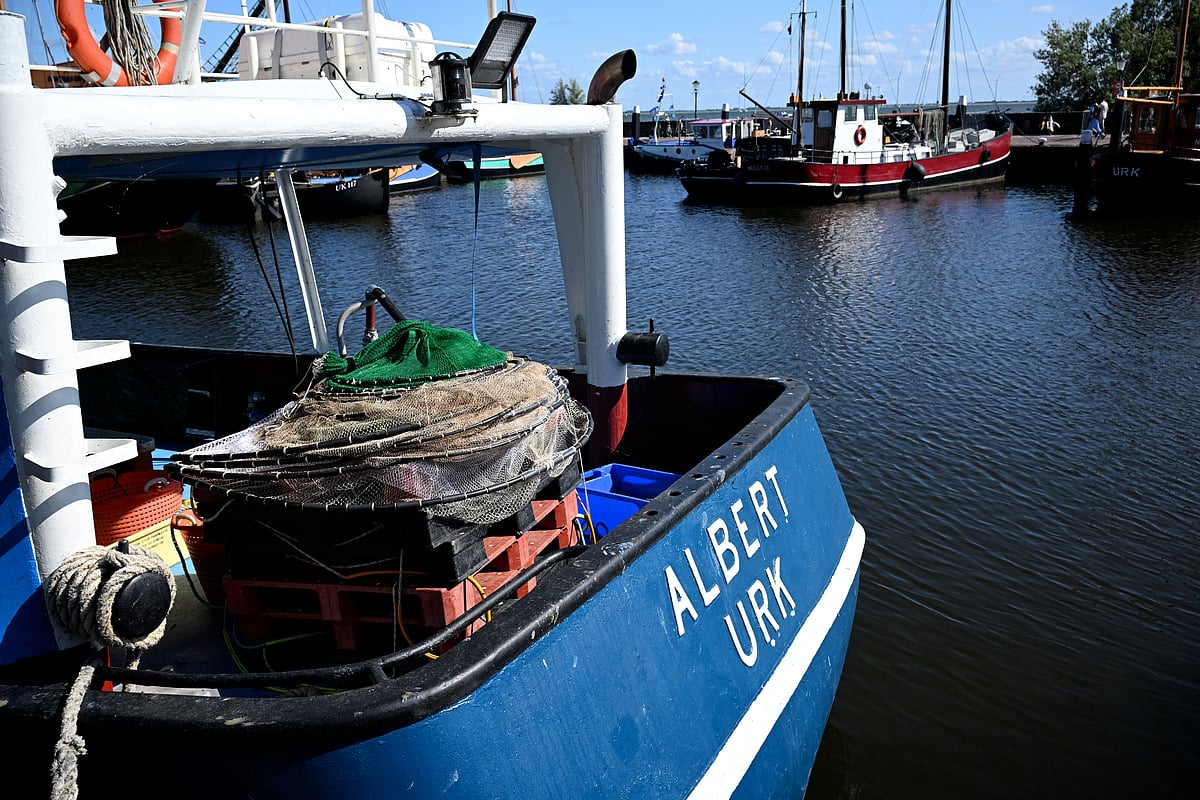
URK: Jan van den Berg stares out at the sea where his father vanished seven decades ago -- lost in a storm just days before his birth. Now aged 70, he clings to the hope of finding even the smallest fragment of his father's remains.
In Urk, a fishing village in the northern Netherlands, the sea has long been the lifeblood for families -- but has often taken loved ones in return.
Some bodies never surfaced. Others washed ashore on German or Danish coasts and were buried in unnamed graves.
Despite the tragedy, Van den Berg -- the last of six children -- became a fisherman like his brothers, defying their mother's terror that the North Sea would claim her sons too.
"We never found his body," he told AFP in a low voice, mumbling under the brim of his hat.
But after decades of uncertainty, advances in DNA technology and artificial intelligence have given Van den Berg renewed hope.
Researchers are now able to match remains with living relatives more accurately than ever before, offering families long-awaited answers and the chance to finally mourn properly.
"Many families still gaze at the front door, hoping their loved-one will walk through it," said Teun Hakvoort, an Urk resident who serves as spokesperson for a new foundation dedicated to locating and identifying fishermen lost at sea.
"All sunken boats have been mapped. Using modern tech, we look at the weather and currents at the time of the shipwreck to estimate where the fishermen might have washed ashore," the 60-year-old said.
Found after 47 years
The foundation, Identiteit Gezocht (Identity Sought), aims to list all unknown graves on the coasts of the North Sea, hoping to identify remains.
The new searches have already borne fruit. A body was recently exhumed on Schiermonnikoog, a small island north of the Netherlands, and returned to the family.
"This man had been missing for 47 years. After all this time, DNA and this new method of work made it possible to discover he came from Urk," said Hakvoort.
Another Hakvoort, Frans Hakvoort, leads the foundation with the support of his two brothers in Urk, a tight-knit Protestant community where certain family names frequently reoccur.
The three men, who have all lost a relative at sea, dedicate their free time to searching for the missing.
"With AI, we search for press articles published after a body washed ashore, possibly in specific circumstances," said Frans Hakvoort, 44.
"We enter all this information into a database to see if we can establish a link. If so, we contact local authorities to see if they can exhume the body."

Advertising by Adpathway





;)