
In Diverse Southwest Houston, Longtime Incumbent Hubert Vo Forced into Runoff Row
At an office tucked in the corner of the Universal Shopping Center in Houston’s Alief area, among Vietnamese restaurants and immigration service offices, I met Democratic state Representative Hubert Vo to talk about the runoff election for House District 149. Instead of meeting at his district office a few streets away, we met at the office from which manages the shopping center. Nearing 70, he wore a light blue suit that seemed to engulf his small frame; he stooped slightly when he stood.
Vo leafed back and forth through a prepared memo with talking points about his record. “I continue to keep the district growing in terms of the economy. … You can see it’s had a lot of changes from many years ago,” Vo said.
Twenty-two years ago, Vo drove from office Talmadge Heflin, a powerful Republican incumbent who had voted against anti-hate crime bills and a proposal to make Martin Luther King Jr.’s birthday a state holiday. After 20 years in office, Talmadge had become increasingly out of touch with his rapidly diversifying district while Vo made a targeted effort to court immigrant voters—and won by just 33 votes.
At the time, he told Texas Monthly: “The Democratic party is the underdog party, and as immigrants, we are underdogs,” he says. “Sometimes when Vietnamese people achieve success here in the U.S., they forget how hard the road was to get here. We need to remember where we came from.”
HD 149 is anchored in southwest Houston and also spans most of Alief along with portions of West Houston and Katy. It’s become one of the most internationally diverse districts in Texas: 44 percent of residents are foreign-born. Hispanics account for nearly 40 percent of the population. Black residents—both African Americans and immigrants—make up more than a quarter of the district. About one in six are Asian, and most are of the Vietnamese community. Today, just 14 percent of the district is white. Nearly one in five residents lives below the poverty line.
Vo’s own story of fleeing the fall of South Vietnam to the Communists, finding refuge in Houston, and then working his way up to become a successful business owner, resonated with the district’s heavily immigrant populace. After a few years of working in local restaurants and shops, he got into the computer wholesale business, became a millionaire, and bought up several McDonald’s franchises. He also owns some commercial and residential properties (where he’s been accused of being a slumlord in the past because of subpar health and building standards).
These days, his critics say it’s Vo who’s out of touch with the district. After running unopposed in the Democratic primary for most of his 20 years in office, he faced three challengers this cycle: college professor Mink Jawandor; David Romero, a residential organizer in the district’s northern area; and Darlene Breaux, a former educator and activist who’s been a board member of Alief ISD since 2017. Breaux—with endorsements from the Texas AFL-CIO, The Houston LGBTQ+ Caucus, and a handful of local elected officials—bested Vo by 9 votes in the March primary, forcing a May 26 runoff contest, which is often a fatal outcome for legislative incumbents in Texas.
Get the newsletter
Vo’s signature contribution to the community is a piece of 2007 state legislation he passed to create the International Management District, a business improvement district that collects taxes to finance security and infrastructure upgrades, which is credited with helping the area’s bustling restaurants, cafes, and shops. “It is growing economically, and also crime is way down,” Vo said.
But the Houston Chronicle editorial board, which endorsed Breaux, wrote that Vo has “struggled to add to that accomplishment” and that “his wins in the Legislature could be called modest at best.” In 2021, Texas Monthly’s “The Best and Worst Legislators” feature designated Vo as “furniture”—a title reserved for the most inconsequential members of the Lege. The magazine skewered the passage of his one resolution to make April 21 “McDonald’s Virtual Legislative Day.” Two years before that, Vo had passed a resolution establishing a “Salad Day” and a day to “commend all Texas McDonald’s owners/operators for their role in furthering the economic vitality of the Lone Star State.”
When I asked about his recent legislative record, Vo read from his prepared memo, repeating talking points about bills he passed this last legislative session, including two laws that tighten access to unemployment benefits.
Vo’s primary opponents told the Observer they felt that Vo was neglecting the district beyond the Vietnamese community in Alief.
In 2023, state redistricting added to House District 149 an area north of Interstate 10 where Romero—one of the primary challengers who didn’t make the runoff—lives. He decided to run “because we need a representative, somebody that actually represents our whole district, and not just the Alief side.” He formed the One Creek West neighborhood organization to represent residential communities north of I-10 in the district.
Romero said simply getting sidewalks built in front of schools and homes has been an issue. He told the Observer he hasn’t been able to engage Vo in the community’s problems. “We work with elected officials, our police department, our constable, businesses, to keep our area clean and safe, working on flooding mitigation, things like that. Those are things that I believe [Vo] should be doing. But every time we try to schedule something with him, there’s no response,” Romero said.
Mink Jawandor ran, also unsuccessfully, for similar reasons. He came as a refugee from Sierra Leone 30 years ago to the Alief area and now teaches government at Houston City College. “Only Asiatown is developing,” Jawandor said. “The other parts of the communities are not developed.”
Both Romero and Jawandor are now supporting Breaux.
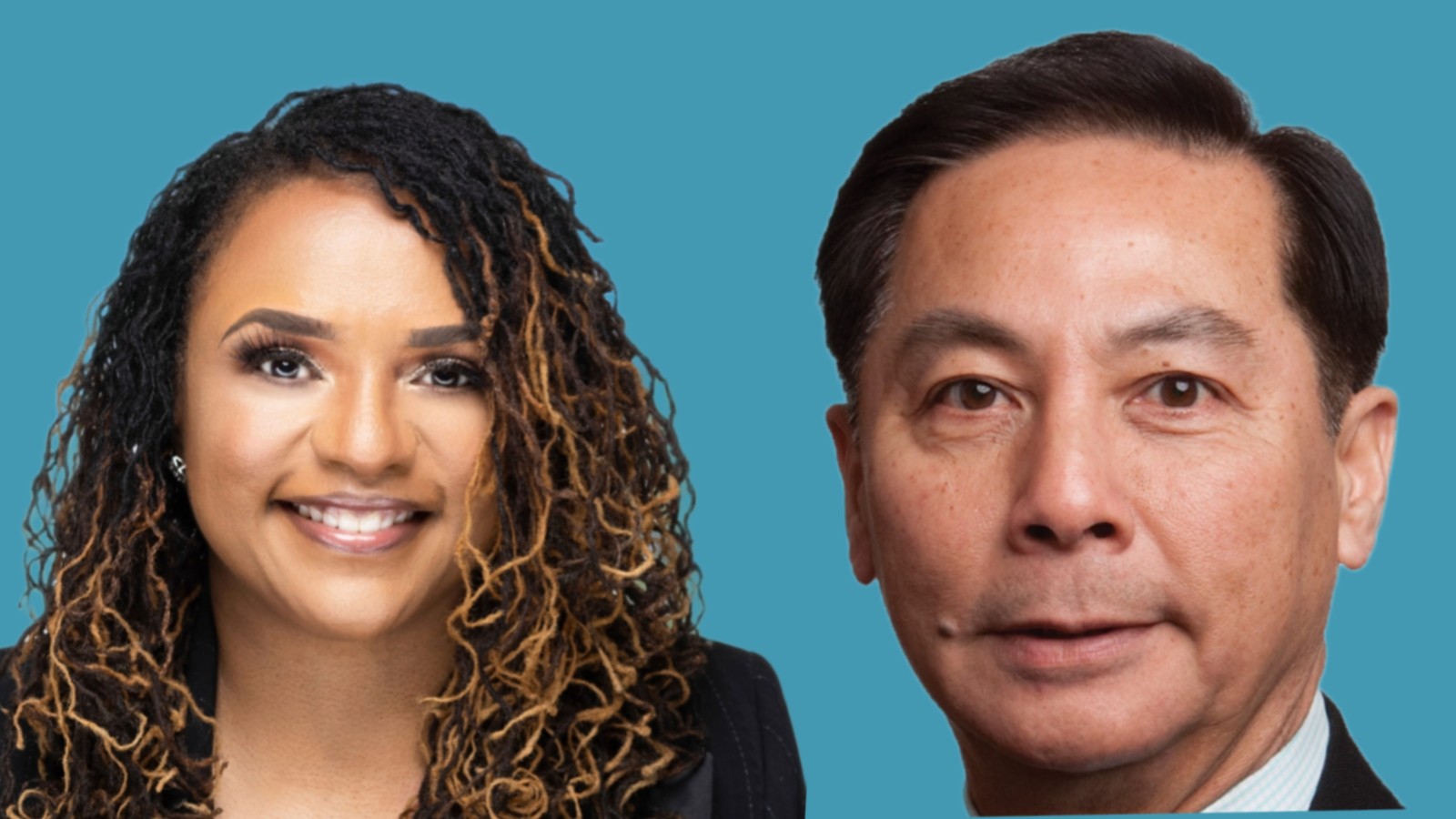
As a school board member who’s served as president of the body since 2023, Breaux said she helped navigate Alief ISD through difficult times, including the COVID-19 pandemic and the budget crisis caused by Governor Greg Abbott withholding a state education funding increase in 2023. She says she’s also helped pass more than $520 million in bond projects for improvements for the district.
As she told me over coffee at a Starbucks on the outskirts of Alief, Breaux said the biggest concerns in the district are related to safety, workforce training, and healthcare. While she didn’t concretely describe what priorities she would pursue in the state legislature, Breaux said she’s been hitting the streets, listening and speaking to people in all parts of the district.
“I had to make sure that I’m reaching all areas of our district,” Breaux said. “I’m out in the community and talking to all the demographics; they have some real concerns. They want some representation that they could communicate with and would be out there for them.”
It’s her background in education that will help carry her in the race, Brandon Rottinghaus, professor of political science at the University of Houston, told the Observer. “Vo has been a stalwart among the Asian-American community, and that’s carried into victory for several years, but the Democratic coalition is changing,” Rottinghaus said. “She’s an education-first candidate, and that’s something that is front of mind for a lot of voters.”
Vo said he’s counting on Vietnamese community representatives and media to turn out the votes for him to beat Breaux. “The Asian community needs to turn out more,” Vo said. He said he first ran in 2004 because the Vietnamese community “was not strong enough to stand on their own by themselves” and always had to “ask for favors to help us with this and that.” Nowadays, “The Vietnamese community is very much organized,” he said.
But some leaders of Vo’s own community have soured on him.
Peter Pham, the chairman of the Vietnamese Chamber of Commerce of Houston, which represents nearly 100 member businesses, told the Observer he’s not sure he’ll vote for Vo. Besides showing up at one of the organization’s events three years ago, Pham said Vo “never shows up, never says anything.”
Bryan Chu, the president of the Vietnamese Community of Houston and Vicinities, a cultural and social service organization, told the Observer he’s planning to vote for the Republican candidate Dave Bennett. Chu said he stopped inviting Vo to the organization’s events since Vo stopped engaging after the first few years in office. Chu himself challenged Vo as the Republican candidate back in 2016 but was easily defeated. “The Vietnamese community is very sick and tired of him,” Chu said. “A lot of people wonder how he keeps getting elected.
In response to criticism about his lack of visibility and public engagement, Vo said, “I’m always available, and people know me. … Every time we have any meetings in the district, I’m there. I was there.”
And yet, despite a serious threat to his hold on elected office, he appears to be largely absent from the campaign trail. His social media accounts have made no mention of his reelection effort throughout the primary and into the runoff. Nor, his opponents say, has he shown up for any Democratic town halls or endorsement meetings.
So, is this Vo’s time to go?
Even with the incumbent’s lethargic campaign, expectations of very low turnout make the runoff fight difficult to gauge—just 11 percent of the district’s registered voters showed up in the primary, and even fewer are likely to turn out for the late May showdown.

Advertising by Adpathway







;)