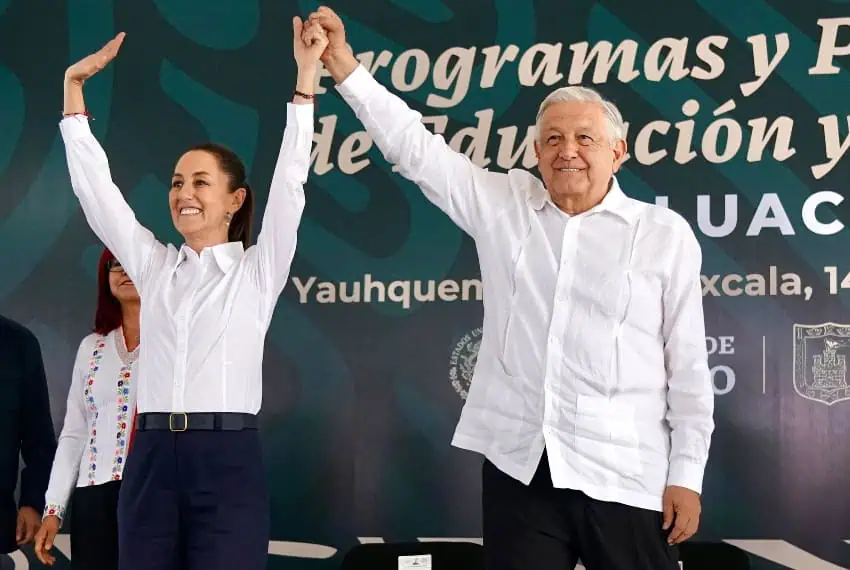
During Sheinbaum’s Q&A session with reporters, one journalist raised a social media post made by El Salvador President Nayib Bukele on Thursday.
On the X social media site, Bukele shared a post from another X user who asked who would be “such an idiot” to compare “security measures” in Mexico to those of El Salvador given that Mexico is “almost 100 times” bigger than the Central American country in terms of land area and has a population of 130 million compared to 6 million in El Salvador.
Above the post he shared, the El Salvador president wrote:
“I’ve seen a lot of posts like this and the truth is I don’t understand the obsession with El Salvador. But, in any case, 28 of the 32 states of Mexico have a population equal to or less than that of El Salvador. Why then can’t they resolve the security issue in a single state with fewer residents than El Salvador, having the resources of a country with 130 million residents? They [should] resolve the security issue in one state first, then in the next one and so on until they contain [insecurity in] those 28 states.”
He visto muchas publicaciones como esta y, la verdad, no entiendo la obsesión con El Salvador. Pero, en todo caso, 28 de los 32 estados de México tienen una población igual o menor a la de El Salvador.
¿Por qué, entonces, no pueden resolver el tema de la seguridad en un solo… https://t.co/WHjFC1kdOX
— Nayib Bukele (@nayibbukele) March 20, 2025
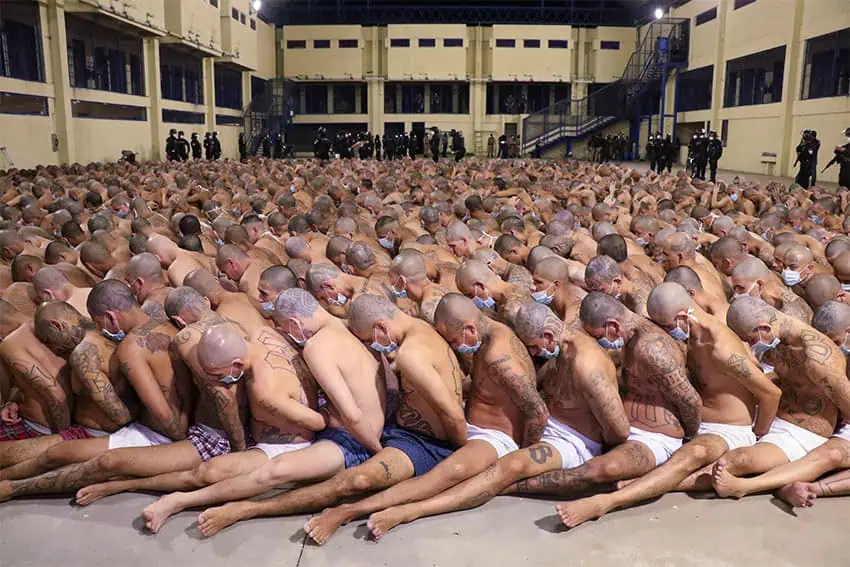
The security situation in El Salvador has improved remarkably during the presidency of Bukele, who began his first term in 2019. However, the 43-year-old leader has faced severe criticism for the methods he has used to reduce crime and violence.”Grave human rights violations under El Salvador’s state of emergency point to a systematic, widespread pattern of state abuse that has seen thousands of arbitrary detentions, the adoption of a policy of torture in detention centres and hundreds of deaths under state custody,” Amnesty International said in December.
“What the [El Salvador] government calls ‘peace’ is actually an illusion intended to hide a repressive system, a structure of control and oppression that abuses its power and disregards the rights of those who were already invisible — people living in poverty, under state stigma, and marginalization — all in the name of a supposed security defined in a very narrow way,” said Ana Piquer, Americas director at Amnesty International.








;)