As Ukrainian POWs die in Russian prisons, autopsies point to a system of brutality
The Associated Press interviewed relatives of 21 Ukrainian POWs who died in captivity. Autopsies performed in Ukraine found that five of these POWs died of heart failure, including soldiers who were 22, 39 and 43. Four others died from tuberculosis or pneumonia, and three others perished, respectively, from an infection, asphyxia and a blunt force head wound.
Padei said cases like these — and others she has seen — are red flags, suggesting that physical abuse and untreated injuries and illness likely contributed to many soldiers' deaths.
“Under normal or humane conditions, these would not have been fatal,” Padei said.
In one autopsy report, coroners said an individual had been electrocuted and beaten just days before dying of heart failure and extreme emaciation. Other autopsies noted that bodies showed signs of gangrene or untreated infections.
“Everything the returned prisoners describe … we see the same on the bodies,” Padei said.
‘Angel in the sky’
Months into Hryhoriev’s detention at the Kamensk-Shakhtinsky prison – and after his daughter saw him in the Russian army’s social media video -- his health deteriorated significantly, according to Honcharov.
But instead of being sent to a hospital, Hryhoriev was moved to a tiny cell that was isolated from other prisoners. Another Ukrainian captive, a paramedic, was assigned to stay with him.
“It was damp, cold, with no lighting at all,” recalled Honcharov.
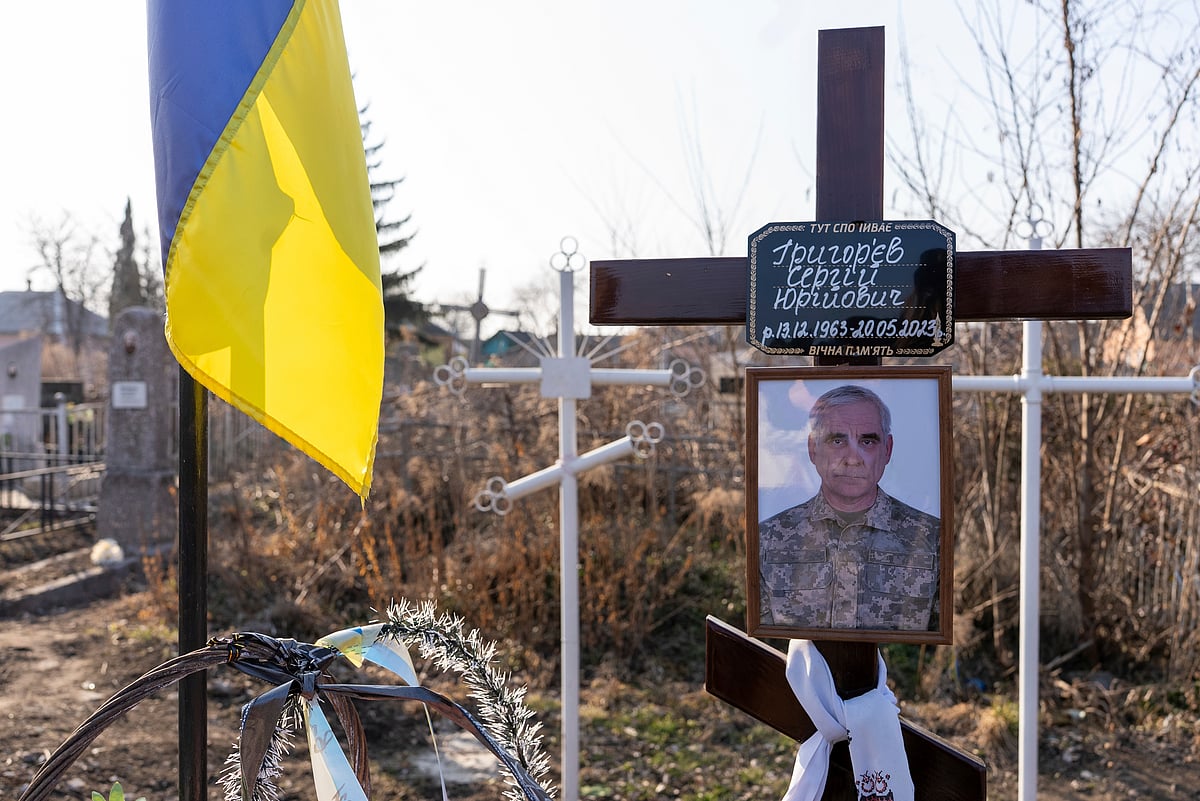
He died in that cell about a month later, Honcharov said. It was May 20, 2023, according to his Russian death certificate.
The Hryhoriev family didn't learn he had died until more than six months later, when a former POW reached out. Then, in March 2024, police in central Ukraine called: A body had arrived with a Russian death certificate bearing Hryhoriev’s name. A DNA test confirmed it was him.
An autopsy performed in Ukraine disputed Russia’s claim that Hryhoriev died of a stroke. It said he bled to death after blunt trauma to his abdomen that also damaged his spleen.
Hryhoriev’s body was handed over to the family last June, and soon after he was buried in his hometown of Pyriatyn.
To honor him, Hryhoriev’s wife and older daughter, Yana, followed Oksana's lead and tattooed their wrists with the optimistic expression he had drilled into them.
“Now we have an angel in the sky watching over us,” Halyna said. “We believe everything will be all right.”

Advertising by Adpathway





;)