Trump endorsements topple GOP incumbents who blocked Indiana redistricting
OAN Staff Lillian Mann and Brooke Mallory
3:42 PM – Wednesday, May 6, 2026
Following the Indiana primary on Tuesday, several Republican state senators who defied President Donald Trump by voting against a mid-decade redistricting measure were ousted by challengers endorsed by the president.
This campaign targeted the 21 Senate Republicans who joined Democrats in December last year to defeat a plan aimed at redrawing the state’s congressional maps to favor the GOP.
Among the seven incumbents on the ballot who had opposed the measure, nearly all were defeated, including veteran lawmakers such as Senators Travis Holdman (R-Ind.), Jim Buck (R-Ind.), and Linda Rogers (R-Ind.).
A symbol of this shift was Blake Fiechter’s (R-Ind.) victory in the Senate District 19 race, where he successfully unseated Holdman, a member of the GOP leadership since 2008.
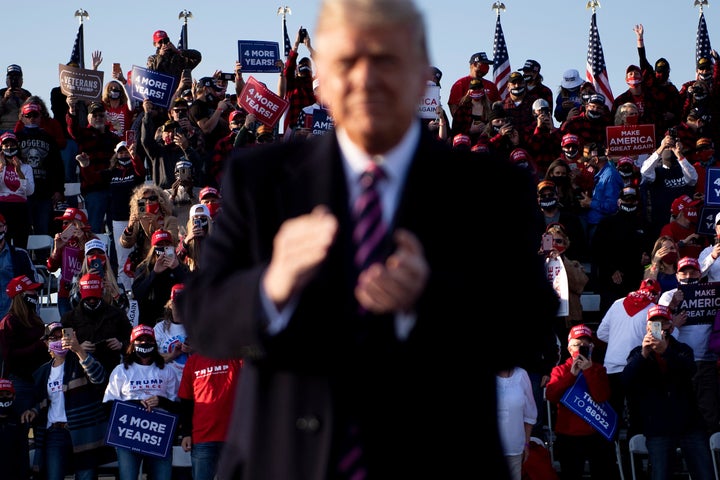
Meanwhile, the sweeping results represent a notable milestone for Trump, as it reinforces his dominance over the state’s Republican base. In total, Trump issued 19 endorsements across Indiana Statehouse races, backing both the primary challengers of his “redistricting opponents” and several incumbents who had supported the redraw.
While Senator Greg Goode (R-Ind.) managed to fend off his challenger to remain the lone survivor among the targeted group, the overall purge of incumbents has left the Senate leadership in potential turmoil and may reopen the door for a renewed redistricting effort in the upcoming legislative session.
“Big night for MAGA in Indiana,” Senator Jim Banks (R-Ind.) wrote on X.
In the Indiana primary, at least five of seven Trump-backed challengers emerged victorious, successfully ousting several Republican incumbents who had voted against a mid-decade redistricting measure.
This primary cycle saw an unprecedented influx of at least $8.3 million from Trump-aligned organizations, targeting local races that typically receive little national attention. These massive expenditures, which included more than $1.3 million in attack ads against Holdman alone, were funded by groups with ties to figures like Senator Jim Banks and Governor Mike Braun (R-Ind.).
Meanwhile, the intense involvement of the president has significantly deepened divisions within the Indiana GOP as the party looks toward the November midterm elections. Despite the scale of the campaign against him, Holdman expressed that he was at peace with his defeat.
“I did what my constituents asked me to do and it cost me my job,” Holdman said, while suggesting that future campaigning styles would grow much more aggressive within the state. “Welcome to D.C. politics in Indiana because this means that’s what’s coming.”
The most expensive of the seven primary races remained too close to call, highlighted by a massive spending blitz from super PACs aligned with Banks and Braun. According to the ad-tracking firm AdImpact, these groups combined to spend over $2.2 million on advertisements targeting incumbent Senator Spencer Deery (R-Ind.).
On the flip side, Deery spent approximately $815,000 on his own media — a significant increase from the $142,000 he spent total during his initial 2022 election cycle. Across all primaries, total ad spending exceeded $13 million, representing a more than 4,000-fold increase over the previous cycle, with at least $8 million funded by groups seeking to unseat incumbents.
Opponents of the redistricting proposal argued that such spending was unprecedented in Indiana, noting that the state’s internal elections had rarely been a priority for the White House or seen such direct presidential involvement.
This financial surge also followed President Trump’s directive for Republican-led states to proactively redraw congressional maps to secure more favorable boundaries ahead of the midterm elections, despite redistricting typically occurring only once per decade.
Indiana initially stood out as the only reliably red state to reject the proposal, even after Texas became the first to implement the changes and the White House applied heavy pressure for Indiana to follow suit.
The administration’s push included meetings between Vice President JD Vance and state lawmakers in both Washington and Indianapolis, with Trump reportedly monitoring each session. Ultimately, Indiana senators’ refusal to pass the measure marked a notable political defeat during the president’s second term.
Meanwhile, the redistricting battle has since fractured the state party, analysts say. Despite Trump winning Indiana three times by at least 16 points, he continues to work with Braun, Banks, and Turning Point Action to primary the Republican officeholders who opposed his agenda.
Jim Bopp, an Indiana attorney who also leads a political action committee aligned with Braun, says he anticipated Trump’s support would carry those endorsed by the president.
“Republican voters overwhelmingly support Trump and when they find out Trump has endorsed a particular Senate candidate, they swing their support behind them,” he said.
Several state senators, however, voiced complete opposition to the redistricting proposal, asserting their firm stance against the measure and citing President Trump’s “aggressive” tone, in their own words, as a significant factor in their disapproval.
“We hate to be told what to do,” said Mike Murphy, a former Republican state representative. “We’re very independent thinking people. So, when Donald Trump and his goons come in and try to tell us that we need to redistrict to help his political future — that’s the worst thing you can do.”
Stay informed! Receive breaking news alerts directly to your inbox for free. Subscribe here. https://www.oann.com/alerts
What do YOU think? Click here to jump to the comments!
Sponsored Content Below

Advertising by Adpathway






;)